Join Us
We are always looking for talented graduate students and post-docs
Projects in the DAN Lab
Metabolic regulation in microbial biofuel producers
The production of biofuels from cellulosic biomass holds promise as a source of clean renewable energy that can reduce our dependence on fossil fuels. Attaining this goal will require engineered microorganisms capable of economical conversion of cellulosic biomass into biofuels. Effective microbe design relies on understanding the relevant metabolic pathways and their regulation, including how the integrated networks function as a whole. Current project in our lab integrate systems-level analyses, especially metabolomics, computational modeling, and genetic engineering to advance understanding of metabolism in a variety of emerging biofuel producing microorganisms, including Z. mobilis, C. thermocellum, S. cerevisiae, and others. Current projects available to new graduate students include:
- Systems-level analysis of metabolic regulation in Z. mobilis and C. thermocellum
- Engineering Z. mobilis for Isobutanol and Isoprenoid production
- Engineering C. thermocellum for production of Jet Fuels precursors
Bile acid transformations by the human gut microbe
Within the last decade, the central role the gut microbiota plays in human health has become widely recognized. An important way in which gut microbes affects host physiology is through their ability to chemically modify bile acids produced by the host. Bile acids act as signaling molecules within the host by modulating activity of nuclear hormone receptors in liver and other tissues and can also modulate gut microbiota composition via selective antimicrobial properties. Changes to the bile acid pool by gut microbes therefore has the potential to affect physiology in these organs, nutrient absorption, drug metabolism, and susceptibility to infection by bacterial pathogens. However, fundamental aspects of this process are still poorly understood. In particular, the distribution of bile acid transforming activity within gut microbes remains largely unexplored and the effects on host physiology resulting from modifications in the bile pool resulting from bacterial action remain poorly understood. Projects in our lab aim to generate a systematic and quantitative understanding of bile acid transforming capabilities in gut microbes and advance our understanding of the molecular mechanisms by which modulation of BA pools by host microbes, via production of secondary bile acids, affect liver host physiology and metabolism. Project available include:
- Elucidate patterns of BA susceptibility and BA transforming activity across phylogenetically diverse gut bacteria
- Establish predictive community-level models of microbe-microbe interactions influencing BA in the mammalian gut.
Skills You Can Learn In The DAN Lab
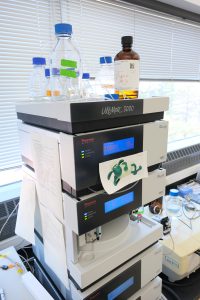
As a member of our lab, you will have the opportunity to learn the ins and outs of HPLC, HPLC-MS, and HPLC-MS/MS. These techniques are powerful and sensitive, allowing us to answer questions about diverse types of microbial metabolism. The skills you gain in our lab are highly specialized and can be easily transferred to a position in the biotech industry or for starting a career in academia.
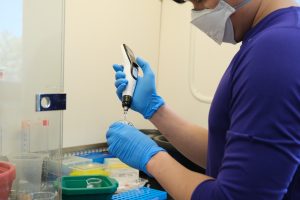
Metabolomics is the heart of the DAN lab. Using the technologies mentioned above, members of the DAN Lab can examine changes to key metabolic pathways in microorganisms. Using isotope tracers, we can perform flux analysis, and we can build models of microbial metabolic pathways under varying environmental conditions. Metabolomics allows us to answer questions related to diverse areas of interest such as biofuels, bile acid metabolism, microbial stress response, and much more.
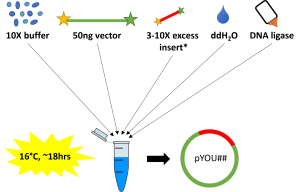
In the DAN Lab, we use a range of genetic engineering tools, from to targeted gene knockouts to creating entire new pathways. Genetic engineering allows us to study diverse pathways in a range of microorganisms. In our biofuel producers, we use genetic engineering to understand thermodynamic bottlenecks in metabolic pathways. In our biofilm producers, we use gene knockouts to elucidate the role of certain genes in biofilm formation and lipid and fatty acid biosynthesis and degradation.
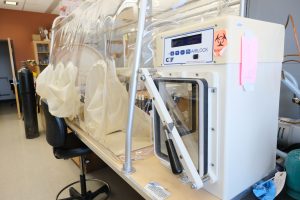
Many of the microbes we work with are facultative or obligate anaerobes, providing a great opportunity to learn a variety of anaerobic techniques. Using anaerobic chambers and benchtop gas manifold systems, we can culture, observe, and experiment with anaerobic bacteria. As a graduate student, knowing how to perform both aerobic and anaerobic techniques will make you a more attractive candidate for future positions.

Our lab is highly interdisciplinary with projects that touch on microbiology, chemistry, physics, biochemistry and more. By working with others in the lab, you will gain a unique perspective on the interconnection of these diverse fields. In addition, you can focus your research on what aligns with your interests and future career goals. The interdisciplinary nature of our research is what allows our lab to take students from a diverse set of graduate programs, including the Microbiology Doctoral Training Program (MDTP), as well as Cellular and Molecular Biology (CMB). Daniel is also able to co-mentor Chemistry graduate students.
Outreach
Science is about more than just bench work and we are proud to be a part of efforts to share scientific thinking and discussion with the community here in Madison and beyond.
YouTube Channel
The DAN Lab’s YouTube channel makes our science open to everyone! Graduate students in our lab get the opportunity to bolster their science communication skills by creating YouTube videos that explain scientific concepts, provide records of complex protocols, and explain routine lab procedures that our research group uses every day.
Science Expeditions and the WI Science Festival
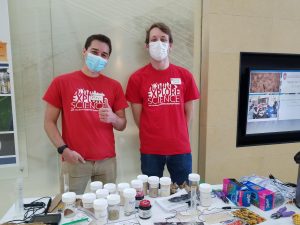
At yearly events like UW’s Science Expeditions and the WI Science Festival we are able to bring the community in to tour and interact with labs, greenhouses, and gardens as well as to bring science out into the community with experiments and demonstrations. While sometimes the experiments can get a little messy, sharing scientific thinking and concepts with visitors of all ages is something we are happy to be a part of!
Decoded
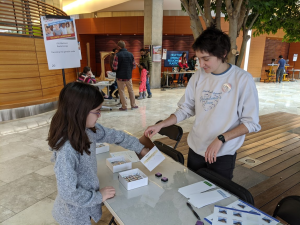
Decoded is a hands-on activity designed to teach young learners the logic of the genetic code. Four colorful symbols are used to represent the four nucleic acids found in RNA. Participants can decode a message written in the colorful symbols using alphabet stamps in a method analogous to a ribosome translating messenger RNA into protein. The activity allows students to engage with molecular biology using stamps and markers as they match codons to reveal the secret message!
Interested In Joining?
For Graduate Students
We are currently accepting rotators for Fall 2026, if you are interested in rotating in our lab or have any questions please contact Dr. Amador-Noguez via email at, amadornoguez@wisc.edu.
For Undergraduate Students
Once you have taken organic chemistry and biochemistry, contact Dr. Amador-Noguez via e-mail. Please send your transcript and a statement on why you would like to join the lab.